
Buying your first home is an exciting milestone, but before you start choosing paint colours and planning where the furniture will go, there’s one important thing to think about: your mortgage.
For many first-time buyers, getting onto the property ladder can feel a little overwhelming. From saving for a deposit to understanding mortgage rates and figuring out how much you can borrow, there's plenty to get your head around.
The good news? It doesn't have to be complicated.
Whether you're looking to buy your first home in Dronfield, Sheffield, Chesterfield or further afield, understanding a few mortgage basics can help you make informed decisions and approach the process with confidence.
Here are five important things to know before taking that first step onto the property ladder.
1. You Might Not Need as Big a Deposit as You Think
One of the biggest questions first-time buyers ask is, "How much deposit do I actually need?"
You might be surprised to learn that you don't necessarily need to save 20% of a property's value before applying for a mortgage.
Some lenders offer mortgages with deposits as low as 5% of the property's purchase price, depending on your circumstances and whether you meet their lending criteria.
For example, if you're buying a home worth £200,000:
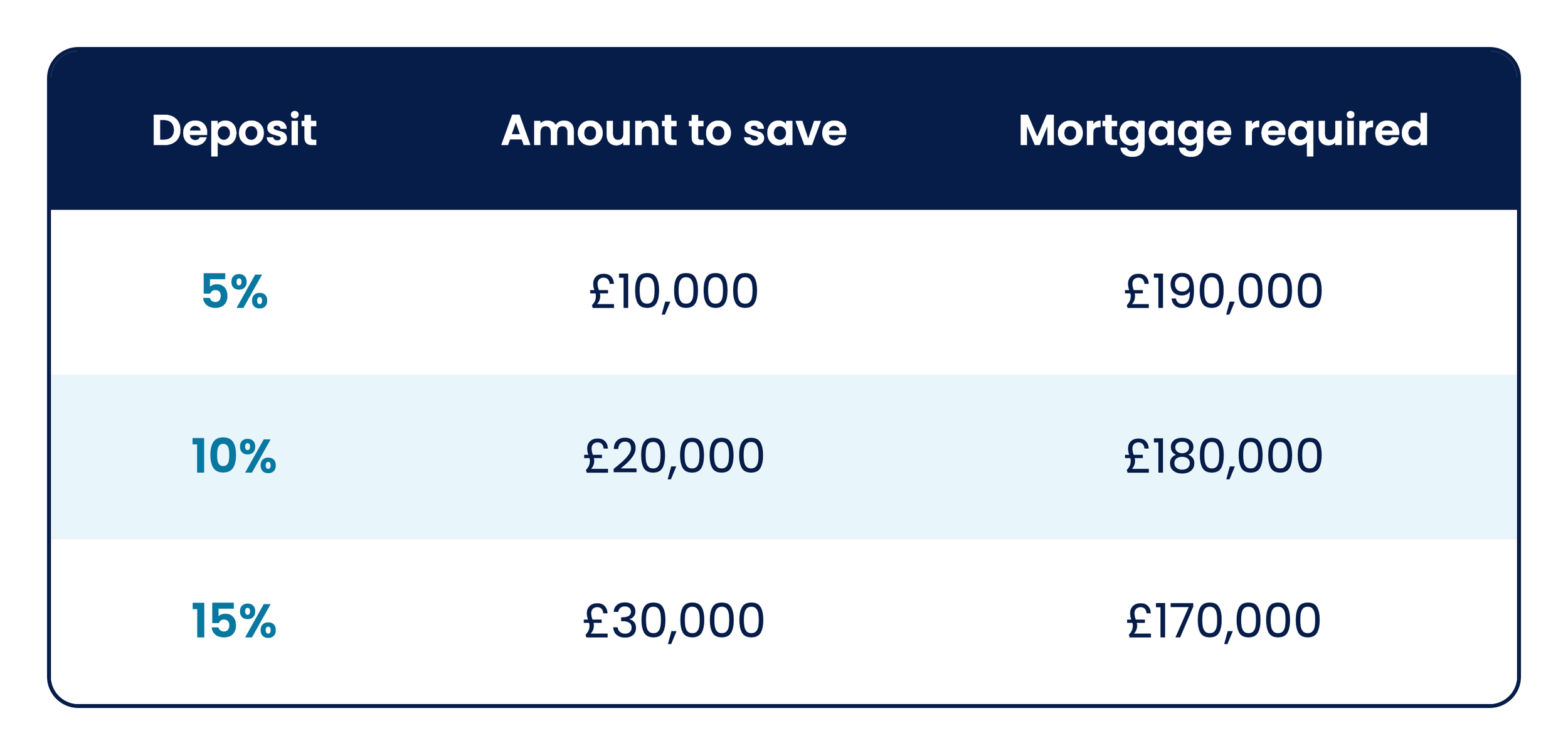
Generally speaking, the larger your deposit, the less you'll need to borrow. A bigger deposit could also give you access to a wider choice of mortgage products and potentially more competitive interest rates.
This is where you'll hear the term loan-to-value, or LTV. Put simply, it's the percentage of the property's value you're borrowing through your mortgage. For example, a £190,000 mortgage on a £200,000 home has a 95% LTV.
Our tip: Don't assume homeownership is out of reach because you haven't saved a huge deposit. Speaking to a mortgage adviser can help you understand what's realistic for your circumstances and what options might be available.
2. How Much You Can Borrow Depends on More Than Your Salary
It's easy to assume that your mortgage budget is simply based on how much you earn, but lenders look at the bigger picture.
When applying for a mortgage, lenders need to be comfortable that you can afford the repayments, both now and in the future.
They'll typically consider:
Your income: How much you earn, including any eligible additional income.
Your employment: Whether you're employed, self-employed or have another source of income.
Your existing commitments: Credit cards, loans, car finance and other regular payments.
Your everyday spending: Household bills, childcare and general living expenses.
Your credit history: How you've managed borrowing and repayments in the past.
Lenders will also assess affordability using their own criteria, including how manageable your repayments could be if your circumstances or interest rates change.
But here's something worth remembering: just because a lender may be willing to offer you a certain amount doesn't mean you need to borrow the maximum.
Think about the lifestyle you want once you've moved in. You'll still want enough money left over for everyday expenses, savings and those unexpected costs that come with owning a home.
Before beginning your property search, it's worth working out a monthly mortgage budget that feels comfortable.
At Charles James, we can help you understand your borrowing options and explore what could work for your individual circumstances.
3. Not All Mortgages Are the Same
When you're buying your first home, it's tempting to focus on finding the mortgage with the lowest advertised interest rate.
However, there's more to choosing a mortgage than the headline rate.
Different mortgage products work in different ways, and understanding the basics can help you choose an option that suits your needs.
Fixed-rate mortgages
With a fixed-rate mortgage, your interest rate stays the same for an agreed period, often two or five years.
This means your monthly repayments won't change during that fixed-rate period, provided you meet the mortgage terms.
For first-time buyers who prefer certainty when budgeting, this can be reassuring.
Variable-rate and tracker mortgages
Variable-rate mortgages have interest rates that can change over time, meaning your monthly repayments could increase or decrease.
Tracker mortgages usually follow an external interest rate, such as the Bank of England base rate, plus a set percentage.
These products can offer flexibility in certain circumstances, but they also introduce uncertainty if rates rise.
Your mortgage term matters, too
Another important consideration is how long you take to repay your mortgage.
A longer mortgage term generally means lower monthly repayments, but you'll usually pay more interest overall. A shorter term may reduce the total interest paid, although monthly repayments will typically be higher.
It's also worth comparing any arrangement fees, incentives and early repayment charges, as these can affect the overall cost of a mortgage.
Our tip: The cheapest-looking mortgage isn't always the most suitable. A mortgage adviser can help you compare different products, understand the costs involved and find an option that works with your financial goals.
You can find out more about our mortgage advice services at Charles James.
4. Getting a Mortgage Agreement in Principle Can Make House Hunting Easier
Before you start booking viewings and imagining yourself moving into your dream home, it's worth considering a Mortgage Agreement in Principle.
Also known as a Decision in Principle (DIP) or Mortgage in Principle (MIP), this is an indication from a lender of how much they might be prepared to lend you, based on some initial financial information.
It's not a guaranteed mortgage offer, but it can be a useful starting point.
Why is it useful?
Having an Agreement in Principle can:
Give you a clearer idea of your potential property budget.
Help you focus on homes within a realistic price range.
Show estate agents and sellers that you've started preparing financially.
Help identify potential mortgage issues before you make an offer.
An Agreement in Principle is usually valid for a limited period, often between 30 and 90 days, depending on the lender.
Once you've found a property and had an offer accepted, you'll still need to complete a full mortgage application. This involves more detailed financial checks and a property valuation.
Some lenders may carry out a soft credit check at the Agreement in Principle stage, while others may use a hard check, so it's worth understanding the process before applying.
Our tip: Getting mortgage advice early can be beneficial, even if you're only beginning to look at properties. It can give you a clearer understanding of what's possible before you get too far into your search.
For a more detailed look at the buying process, read our guide to buying your first home in Dronfield.
5. Remember, There's More to Budget For Than Your Deposit
Saving for a deposit is a major achievement, but it's important to remember that there are other costs involved in buying your first home.
Planning for these expenses early can help avoid any surprises further down the line.
Some of the costs you may need to consider include:
Solicitor and conveyancing fees: The legal work involved in buying your property.
Mortgage fees: Some lenders charge arrangement, booking or valuation fees.
Property surveys: Additional inspections that can help identify potential problems before you buy.
Moving costs: Whether you're hiring a removal company or moving everything yourself.
Buildings and contents insurance: Protecting your home and belongings, with buildings insurance normally required by your mortgage lender.
Ongoing household costs: Council Tax, energy bills, maintenance and any applicable service charges.
What about Stamp Duty?
If you're buying your first home in England, you may qualify for First-Time Buyers' Stamp Duty Relief.
Under the rules currently in place:
Qualifying first-time buyers pay no Stamp Duty on the first £300,000.
For properties costing between £300,001 and £500,000, Stamp Duty is charged at 5% on the portion above £300,000.
If the property costs more than £500,000, first-time buyer relief doesn't apply and standard rates are payable.
These rules are subject to eligibility requirements, including everyone purchasing the property being a first-time buyer and intending to use it as their main residence.
For example, if you're an eligible first-time buyer purchasing a home for £250,000, there would be no Stamp Duty to pay.
Although Stamp Duty relief can help reduce upfront costs, it's still important to account for the other expenses associated with purchasing and maintaining a property.
Our tip: Try to keep some savings aside after paying your deposit and buying costs. Having a financial buffer can help with unexpected repairs and the everyday costs of settling into your new home.
Ready to Take Your First Step Onto the Property Ladder?
Buying your first home is a big financial commitment, but with the right preparation and guidance, the mortgage process doesn't have to feel daunting.
From understanding how much you could borrow to comparing mortgage products and preparing your application, getting advice early can help you make informed decisions.
At Charles James, we understand that everyone's circumstances are different. Whether you're still saving for your deposit, starting to explore properties or getting ready to apply for your first mortgage, our friendly team is here to help.
Based in Dronfield, we provide mortgage advice to clients across Sheffield, Chesterfield, Derbyshire, Yorkshire and beyond.
Taking your first step? Let's talk.
We offer a free initial consultation to discuss your circumstances, answer your questions and help you understand your mortgage options.
Get in touch with Charles James or call us on 01246 296060 to find out how we can help.
Important information: This article is for general information only and does not constitute personal financial, tax or legal advice. Your home may be repossessed if you do not keep up repayments on your mortgage.